
THE CULINARY JOURNAL

Notes for the everyday table.

Practical perspectives on blade geometry, steel selection, and maintaining tools that elevate daily cooking.

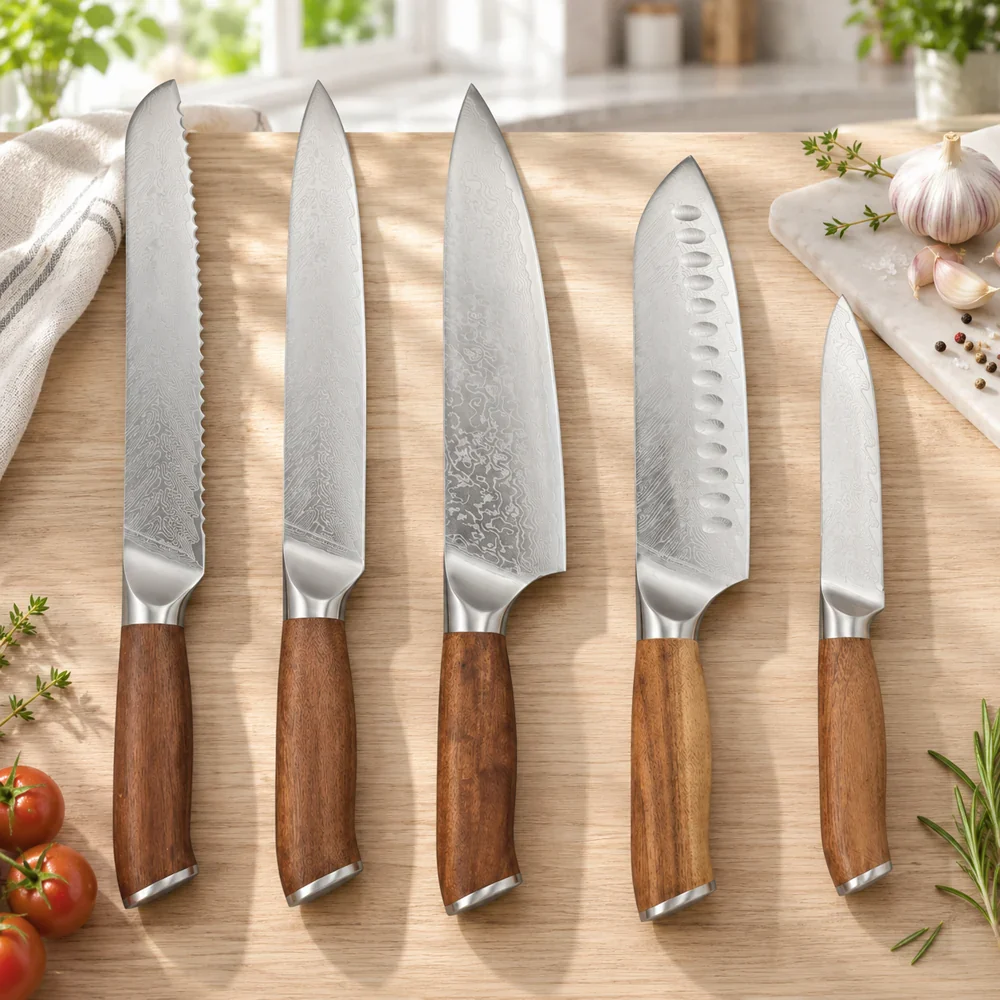
Knife set on a kitchen countertop

01 / SELECTION PRINCIPLES

Building an essential cutlery block.

Begin with the core trio that accounts for ninety percent of kitchen tasks: an 8-inch chef’s knife for bulk chopping and slicing, a serrated utility blade for crusty bread and delicate tomatoes, and a 3.5-inch paring knife for hand-held trimming. Look for full-tang construction, comfortable bolster transitions, and balanced blade weight.

Explore knife sets ↗
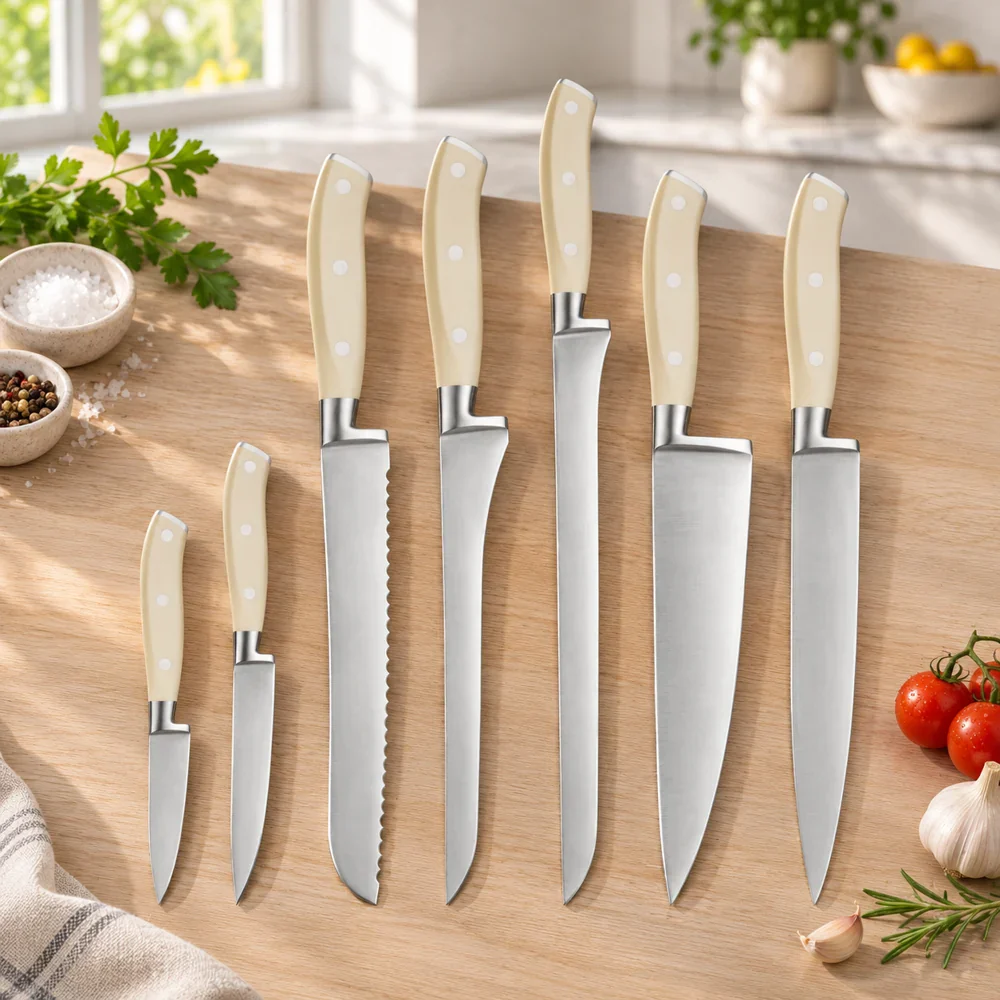
Kitchen knives arranged on a preparation counter

02 / METALLURGY & STEEL

Understanding high-carbon vs. Damascus steel.

High-carbon stainless steels like 5Cr15MoV and 7Cr17 balance ease of sharpening with corrosion resistance, making them ideal workhorses for busy domestic kitchens. Damascus laminated steels (often with AUS-10 or VG-10 cores) combine exceptional core hardness (HRC 60±2) with layered outer cladding that absorbs lateral stress while exhibiting mesmerizing organic rippled patterns.

View Damascus knives ↗